



|
Why is four axis machining so popular?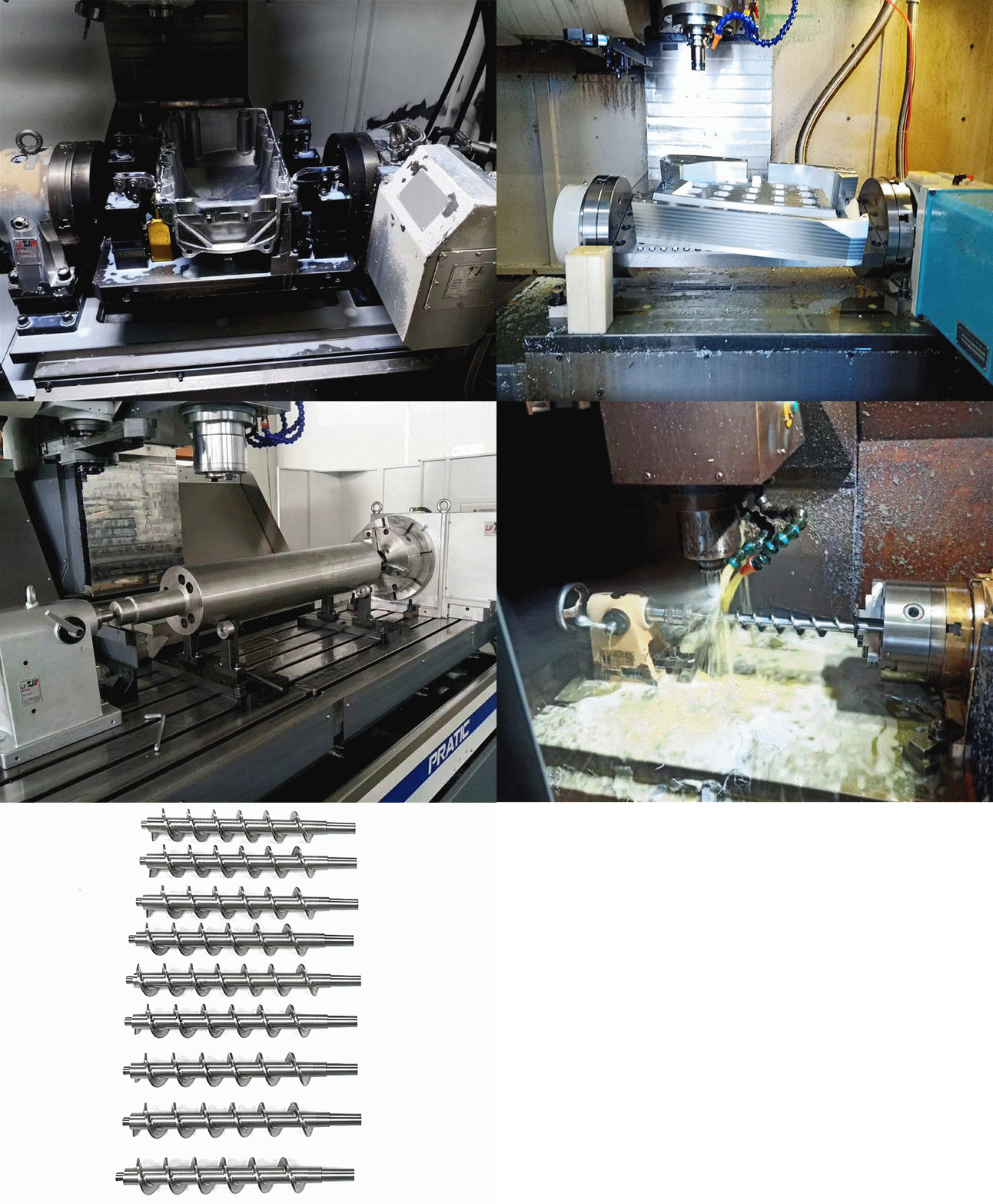     Why is four axis machining so popular?Four axis machining is special compared to three-axis and five axis machining. Four axes can process extremely complex parts with high precision like five axes, but its cost is close to that of three axes. In addition, quadcopters also have many advantages such as high production efficiency, high precision, and high surface smoothness. Four-axis Machining What is four axis machining? 1. Definition of 4-axis A four axis machine tool has at least four coordinates, which are three linear coordinates X, Y, Z and one rotational coordinate A or B. The A axis rotates around the X axis. The B axis rotates around the Y axis. 2. Characteristics of Four Axis Machining A. Four axis machining can complete machining tasks that cannot be done by three axes or require long clamping time. B、 Four axis machining can improve accuracy, quality, and efficiency when processing free space surfaces. C. Determine the 4-axis coordinates. Determination of Z-axis: The Z-axis refers to the direction of the machine tool spindle or the vertical direction of the workpiece clamping worktable. Determination of X-axis: The X-axis refers to the horizontal plane parallel to the installation surface of the workpiece, or the direction perpendicular to the rotation axis of the workpiece on the horizontal plane. The positive direction is the direction away from the spindle axis. So there are two types of 4-axis, XYZ+A,XYZ+B。 The XYZ+A 4-axis is suitable for machining rotating workpieces and turning milling.
XYZ+B, a 4-axis machine, is suitable for processing small products because its worktable is small and the spindle rigidity is poor.
4-axis can achieve machining of all five surfaces except for the bottom surface. But we need to conduct analysis before processing. Available materials: metal and plastic. What are the advantages of four axis machining? 1. There are fewer processing and clamping procedures, resulting in less processing time. 2. Four axis machining can process complex surfaces that are difficult to machine with basic machining, as well as areas that cannot be observed. 3. The tool wear has been improved. 4. 4-axis machining technology reduces clamping time. 5. No need for fixtures. 6. Improved surface smoothness. 7. Concentrated production. It can be processed multiple times on a 4-axis machine. 8. The processing and production efficiency has been greatly improved. What are the limitations of four axis machining? 4-axis machining is limited by its Geneva mechanism, as it only allows the 4th axis in principle but does not support continuous machining. In addition, during high-intensity use, the wear of the worm gear mechanism is very high. Application of Four Axis Machining Four axis machining is widely used in various mechanical industries such as aerospace, shipbuilding, pharmaceuticals, automobiles, and molds. Typical components of a four axis system include cam, turbine, worm, propeller, shoe mold, human body model, automotive parts, and many other precision parts.
|


