|
|
Three major benefits of 3D printing metal parts The cost of each part is the same for small and large batches. Complex parts are no more difficult to 3D print than simple parts. Metal 3D printing can produce parts that cannot be produced by any other manufacturing method. The cost of each part for small and large batch metal 3D printing is the same. As production increases, almost every available manufacturing method becomes cheaper on a cost per piece/part basis. Casting, machining, and forming (among others) are good examples. In small and medium-sized batches, their implementation costs may be very high. However, on a large scale, they are the cheapest method for manufacturing parts. This is partly due to the difference between indirect costs (costs incurred in manufacturing parts) and unit costs (costs required to manufacture additional parts).
Casting and injection molding are excellent examples of high indirect costs/low unit costs - in small quantities, the discrete cost of required tools pushes part costs to unreasonable levels. However, due to the extremely low additional cost per unit, the overall part cost becomes very cheap during mass production. 3D printing metal reverses this situation by using highly automated processes that generate almost no indirect costs. The minimum additional upfront labor is required to print the 100th part, and the system uses the same amount of consumables on each part. In metal 3D printing, complexity is free Years of manufacturing training have enabled most engineers to design and manufacture parts as simple as possible through hard coding. The reason behind this is both simple and economical: for most manufacturing processes, increased complexity equals increased costs. Complex parts require more work to program machines, more advanced machines to build them, and more time to complete them. In most manufacturing methods, this remains consistent. Everything from the rolling mill to the castings is affected. Metal 3D printing is not. Almost all metal manufacturing processes rely on subtractive processes (even casting requires molds). Traditional manufacturing of parts starts with a piece of metal, and then machines (usually mills or similar) remove the material to manufacture the final part.
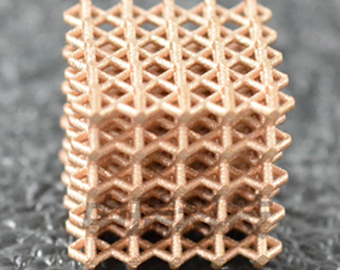
Due to highly automated additive manufacturing processes, the cost of metal 3D printing depends on part size rather than complexity. The tool path is completed by 3D printing slicing software, eliminating the inherent labor and CAM costs of traditional methods. No programming is required, only a small amount of preparation responsibility is needed, and the cost of parts is only the materials and maintenance of the machine. The additive manufacturing process generates very little material waste and movement during the part manufacturing process. If the design is printable, there will be no additional costs associated with complexity. 3D printers can produce parts that other machines cannot Every manufacturing method has its limitations -3D printing is no exception. However, due to its unique process, metal 3D printing can produce parts that other platforms cannot. The result is that the parts can be truly optimized for their use cases without being limited by traditional manufacturing constraints. These parts range from ultra complex (such as topology optimized parts in derivative design software) to process optimized parts (such as injection molds with profiled cooling channels or customized manifold designs). Most of these 'impossible parts' share a common key feature: complex curves, shapes, or cavities that cannot be removed from the material through traditional processes. The breadth of impossible parts that can be manufactured on metal 3D printers has not been fully explored, so their applications are not yet fully understood. As metal 3D printing is adopted by the manufacturing industry, we may see a new design paradigm centered around the unique advantages of 3D printing as a process. Metal 3D printing undoubtedly provides another method for manufacturing, opening up new opportunities that previously prohibited cost or design. Metal 3D printing will become a valuable tool for engineers, designers, and manufacturers worldwide. |